

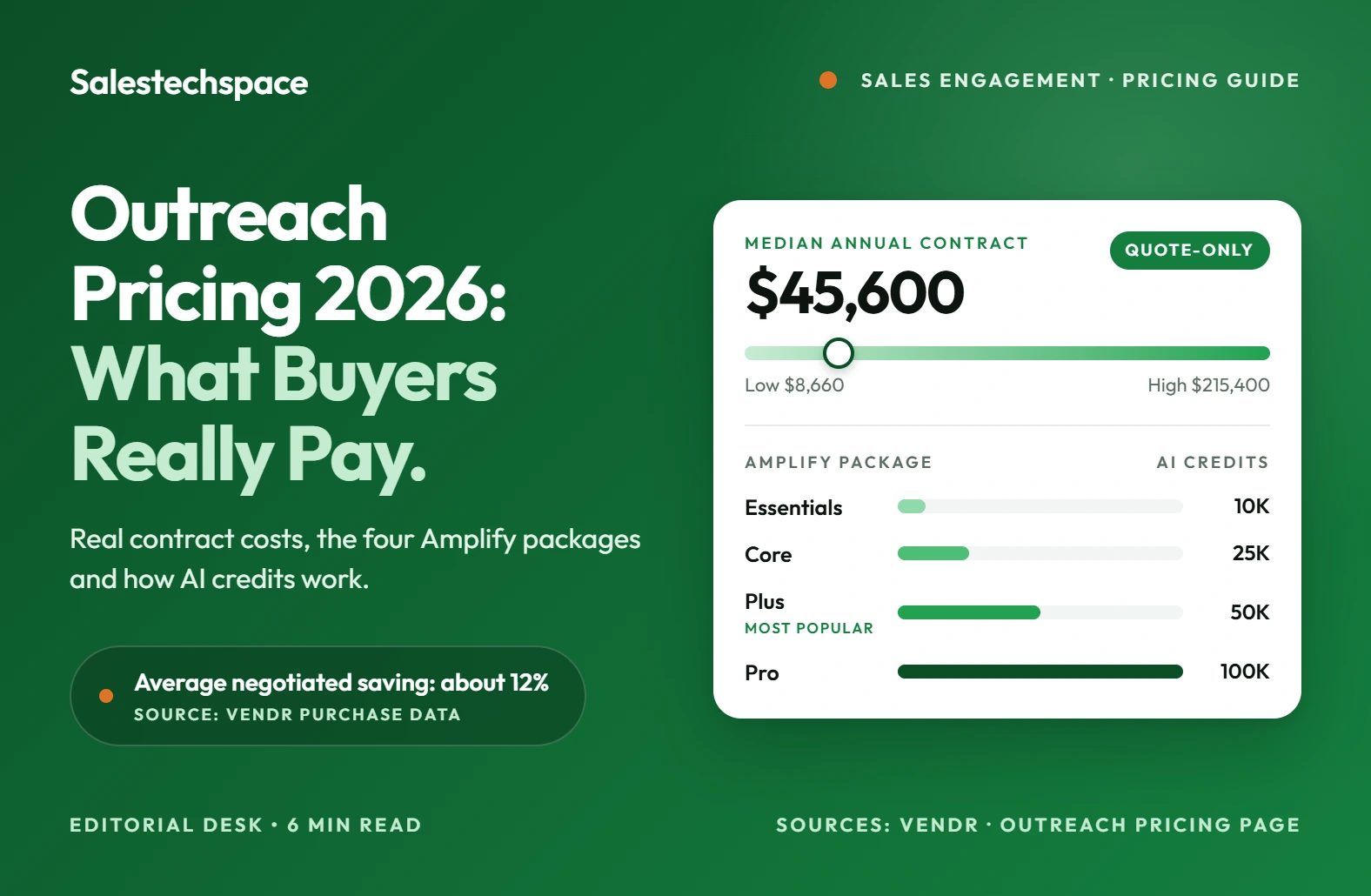
Outreach pricing is quote-only. The pricing page lists four Amplify packages and their AI credit allowances, but not a single dollar figure. Most articles that rank for this search are written by competing vendors and fill the gap with price ranges they never source.
This guide does it differently. It combines purchase data from Vendr, a software buying platform, with Outreach’s own pricing page and support documentation, so you know the realistic range, what each package includes and which questions lower the quote.
| Quick answer: Outreach pricing is custom, combining per-user seats with AI credits. According to Vendr’s purchase data, the median buyer pays about $45,600 a year, with contracts ranging from roughly $8,660 to $215,400, and buyers save about 12% on average through negotiation. Outreach sells four packages: Amplify Essentials (10,000 AI credits), Core (25,000), Plus (50,000) and Pro (100,000). Outreach states there are no platform fees and support is included. |
How much does Outreach cost in 2026?
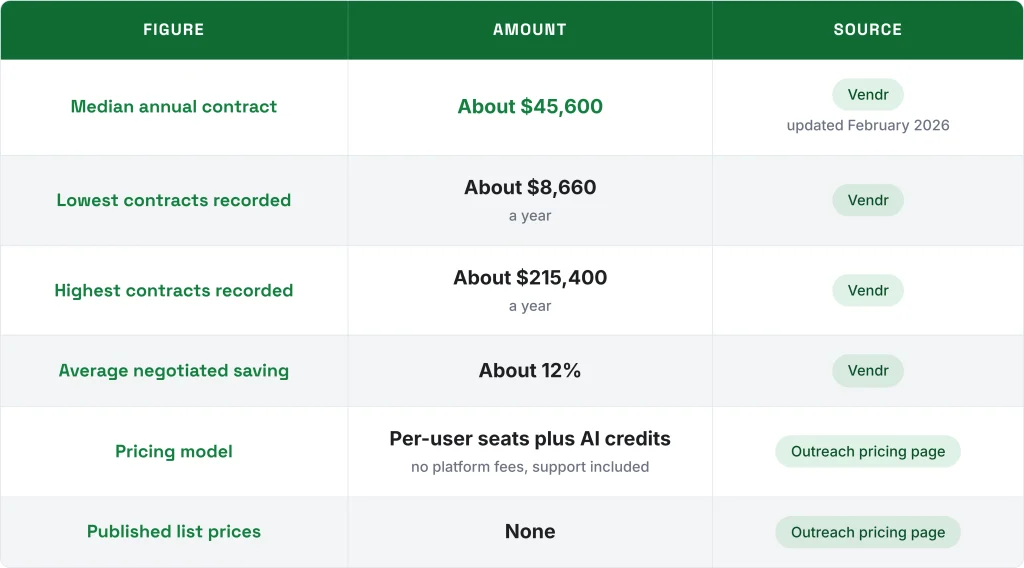
The median blends small teams with large enterprise rollouts. Your quote will move mainly with three things: the number of seats, the package, and how many AI credits you need beyond the included allowance.
Outreach pricing per user: Why there is no fixed number
People search for a per-seat price because older Outreach plans were sold that way. In 2026, the seat price is only part of the bill. Each package bundles a different feature set and credit allowance, and the per-user rate depends on volume and term. A simple way to read any quote:
| Quote formula: Annual cost = (seats × per-seat price for the package) + any extra AI credit packs + any paid add-ons. Divide by seats to get your true per-user cost, then compare that number across vendors, not the headline seat price. |
Ask Outreach to show these three parts as separate lines. If the quote only shows a total, you cannot tell whether a discount came from seats or from credits.
Outreach Amplify packages and what each includes
Outreach’s pricing page lists four packages. Several pricing articles still describe three, so make sure the quote you receive names the package you think you are buying.
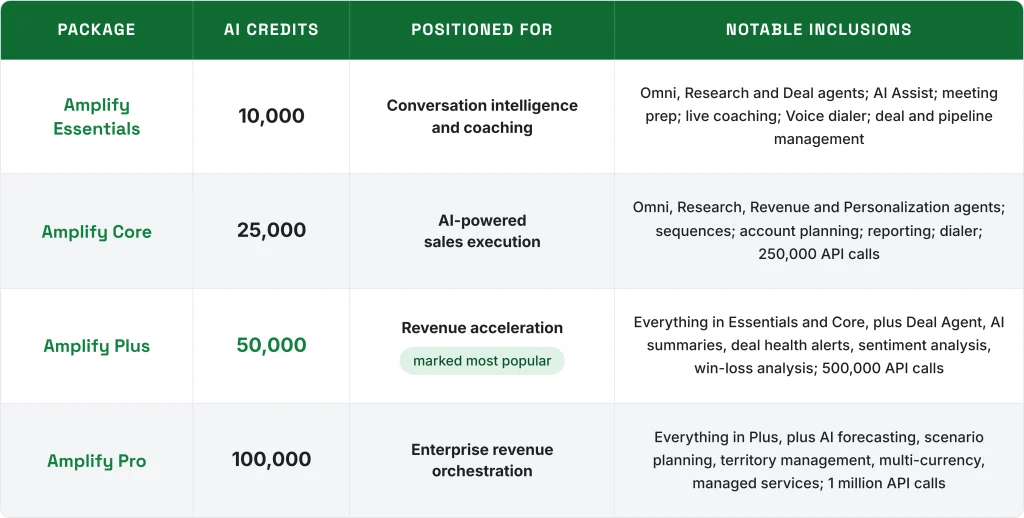
Two pricing traps sit in this table. Essentials is built around conversation intelligence and its listing does not include sequences, so it is not the cheap way into sales engagement. And forecasting appears only in Pro, so teams that want engagement and forecasting from Outreach are buying the top package.
Outreach AI pricing: How credits work
Outreach meters AI through credits. Each package includes an allowance, credits are deducted per AI action at set rates, and extra credit packs can be bought at any time. The public page does not show what each action costs, which makes the allowance hard to judge. Before signing, ask for three things in writing:
- The credit cost of the AI actions your team will use most, such as research, email personalization and deal summaries
- What happens when credits run out: do features stop, or do overages bill automatically?
- Whether unused credits roll over, and when the allowance resets
Then run a two-week pilot, measure credit burn per rep, and size the package from real usage rather than the sales deck.
What changes the Outreach price for your team
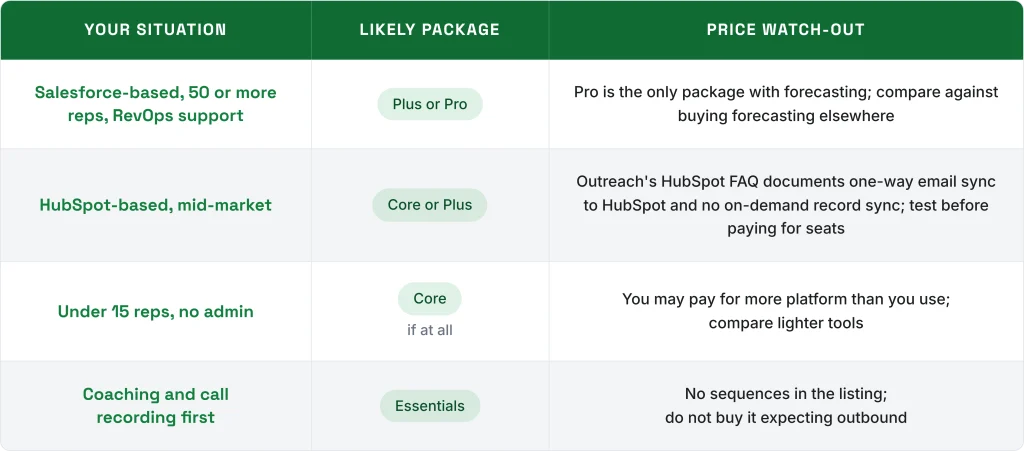
For small teams, our list of AI SDR tools covers lighter options, and if the CRM decision is still open, start with the best B2B sales CRMs.
Outreach vs Salesloft and other competitors on price
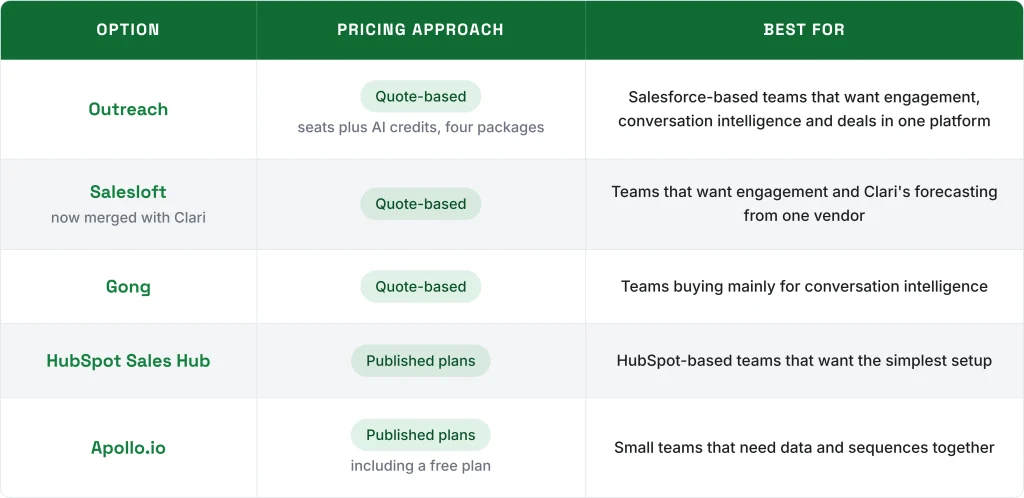
Clari and Salesloft completed their merger in December 2025, according to destinationCRM. That gives buyers a second vendor offering engagement and forecasting together, which is useful when negotiating an Outreach Pro quote.
What you get for the price in 2026
- February 2026: a product release added a Meeting Prep Agent in beta, a Deal Agent that can update opportunity fields automatically, scheduled research, an Outreach MCP server for sharing data with outside AI tools, and a LeadIQ enrichment integration.
- April 2026: Outreach launched Omni, a conversational agent available in Slack and mobile, and Agent Studio, a visual tool for RevOps teams to build custom agents.
- Outreach holds a 4.3 out of 5 rating from 3,665 reviews on G2 (checked 15 October 2026).
These features are only worth paying for if someone owns them. Decide before signing which fields the Deal Agent may change, and who reviews its updates.
How to negotiate Outreach pricing
- Buy the package for the workflow you run today, not the one on the roadmap. Upgrading mid-term is easier than downgrading.
- Ask for seats, credits and add-ons as separate lines.
- Get the credit cost per AI action and the overage terms in the contract.
- Ask whether implementation is included and who owns it.
- Confirm the renewal date, notice period and any renewal price increase in writing.
- Use a competing quote. With Salesloft and Clari now combined, a like-for-like alternative exists.
Vendr’s average saving of about 12% is lower than for many sales tools, so treat the first quote as close to firm on price and push harder on terms: credits, ramp schedules, renewal caps and included services.
FAQs:
How much does Outreach cost per year?
Vendr’s purchase data puts the median Outreach contract at about $45,600 a year, with recorded deals from roughly $8,660 to $215,400.
How much does Outreach cost per user?
Outreach does not publish a per-user price. Seats are quoted per package, so divide the total annual quote by seats to find your true per-user cost.
What are Outreach AI credits?
They are the units Outreach uses to meter AI actions. Packages include from 10,000 credits in Essentials to 100,000 in Pro, and extra packs can be bought.
Does Outreach have a free plan or trial?
Outreach does not list a free plan. Its pricing is quote-based, so ask about a pilot during the sales process.
Which Outreach package includes forecasting?
Only Amplify Pro includes AI forecasting and scenario planning, according to Outreach’s pricing page.
Is Outreach more expensive than Salesloft?
Both are quote-based, so it depends on your seats and package. Get quotes from both for the same workflow and compare total annual cost.